Water Heater Making Popping or Rumbling Noises
Popping or rumbling from your water heater usually means sediment has built up on the tank floor. Here's why it happens in Pahrump and how to fix it.
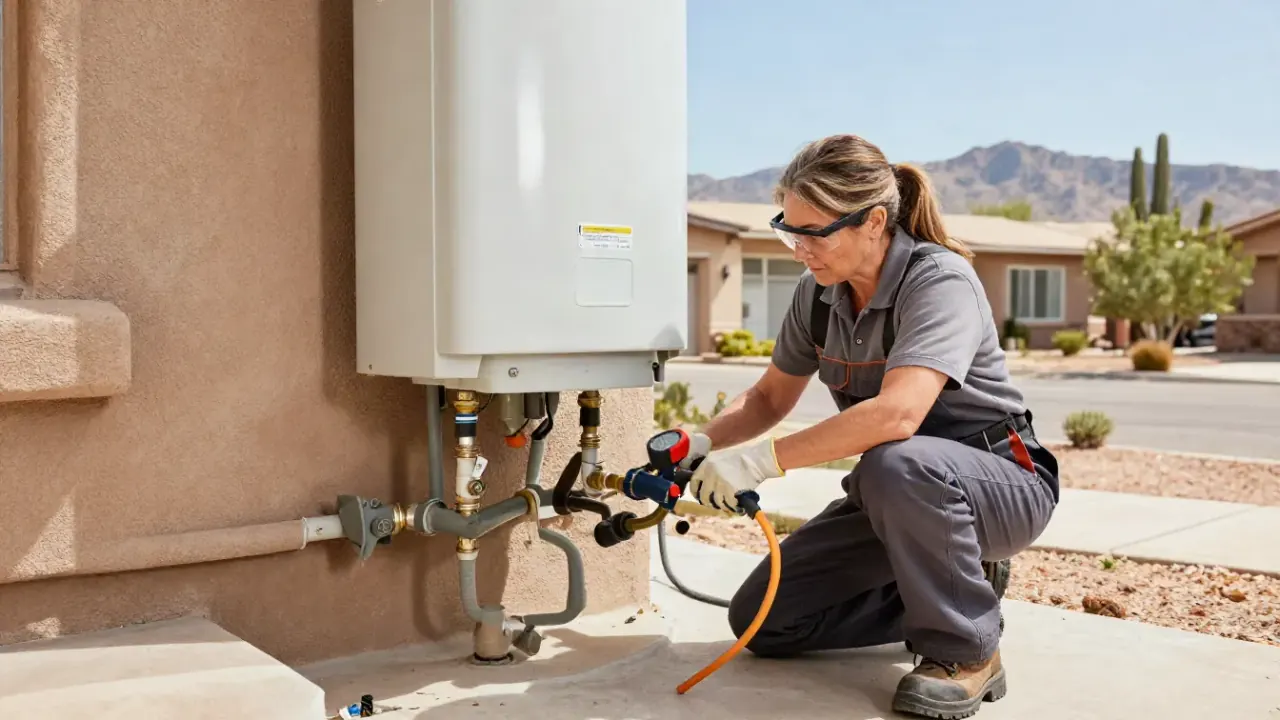
A water heater making popping noise in Pahrump NV is almost always telling you that sediment has collected on the tank floor and is trapping steam under a hard crust. The popping is that steam forcing its way out, and the fix is to flush the tank before the sediment cooks the steel and shortens the heater's life. This article explains why Pahrump water makes the problem worse than in most cities, how to flush a tank yourself, and when the noise means you should stop and call us.
We are a local water heater repair company, and we have flushed hundreds of tanks across the valley. The pattern is consistent: hard water, a tank that is five or more years old, and a homeowner who first noticed the rumble last winter. If that sounds familiar, keep reading.
Why Is My Water Heater Making Popping Noises in Pahrump NV?
Water heater popping noise in Pahrump is a sediment problem, and it starts with our water. Pahrump draws from groundwater wells that run hard - we routinely measure 12 to 18 grains per gallon of calcium carbonate, and some wells on the south side of town push past 20. That is roughly two to three times the national average. Every gallon that enters your tank carries dissolved calcium and magnesium, and when the burner heats that water, the minerals drop out of solution and settle on the bottom of the tank.
Over a year or two, that layer turns into a crust. Water can't reach the steel underneath, so the burner keeps firing and the crust keeps getting hotter. Eventually the water trapped beneath it flashes to steam, and the steam punches through the crust with a pop. That is the sound you hear, and it repeats every heating cycle.
Sediment also insulates the burner from the water it is supposed to heat. A tank with a half-inch of scale can take 20 to 30 percent longer to recover, which is why your showers feel shorter even though the thermostat hasn't moved. You are paying for gas or electricity that never reaches the water.
If you have already noticed rusty water or a puddle under the tank, the sediment has been there a while. Rusty water means the tank lining is giving up, and a puddle points to a failed fitting or a cracked tank. Those are separate problems from the noise, and they need Water Heater Leak Repair Pahrump NV rather than a simple flush.
What Causes Water Heater Rumbling in Pahrump?
Pahrump NV water heater rumbling comes from the same sediment layer, but the rumble is the low-frequency version of the pop. When the crust is thick and uniform, steam can't escape in one sharp burst. It churns under the scale and vibrates the whole tank. Homeowners describe it as a kettle boiling in the garage or a distant train.
Three conditions make rumbling worse in our area:
- Hard water. The higher the mineral content, the faster the scale builds. Pahrump's well water is the main driver.
- High tank temperature. A setting above 140°F accelerates mineral precipitation. Most tanks here do fine at 120°F to 125°F.
- Infrequent flushing. A tank that has never been flushed in six years will rumble louder than one flushed every 12 months.
We also see rumbling in homes on the west side of the valley, where the water is especially mineral-heavy. If you live in Calvada Valley, your tank is working harder than most, and annual flushing is not optional. The same goes for Mountain Falls, where larger homes with two tanks often have one that gets neglected.
One more cause people miss: a failing lower heating element in an electric tank can make a sizzling or popping sound that sounds similar. If your tank is electric and the noise starts within seconds of the element kicking on, the element itself may be cracked. That is a different repair, and our Electric Water Heater Element Replacement Pahrump NV service covers it.
How to Fix Water Heater Popping Noise in Pahrump Nevada
Fixing water heater popping noise in Pahrump Nevada starts with a full tank flush, and you can do it yourself if you are comfortable with a garden hose and a drain valve. Here is the process we use on every service call.
- Shut off the power or gas. For electric, flip the breaker. For gas, turn the thermostat to pilot or off.
- Close the cold-water inlet valve on top of the tank.
- Connect a hose to the drain valve at the bottom and run it to a driveway or drain. Pahrump's water is hard enough that you do not want it on your garden.
- Open a hot-water faucet upstairs to let air in, then open the drain valve. The tank will empty in 10 to 20 minutes.
- Flush until the water runs clear. On a heavily scaled tank, this can take 15 to 30 minutes of running water through the tank.
- Close the drain, reopen the inlet, and let the tank refill before restoring power. Running an electric element in a dry tank burns it out in seconds.
If the noise persists after a flush, the sediment has hardened into scale that a simple drain won't remove. That is when we bring in a pump and descale the tank, or recommend replacement if the steel is already compromised. For tankless units, the same minerals coat the heat exchanger, and the fix is a dedicated flush - our Tankless Water Heater Flushing & Descaling Pahrump NV service handles that with a descaling solution and a recirculation pump.
One more step most homeowners skip: replace the anode rod while the tank is drained. The anode is a sacrificial magnesium or aluminum rod that corrodes instead of your tank lining. In Pahrump's water, an anode rod lasts about three to five years. Once it is gone, the tank starts rusting from the inside. Our Anode Rod Replacement & Tank Flushing Pahrump NV service combines both jobs in one visit.
Is a Popping Water Heater Dangerous in Pahrump?
A popping water heater in Pahrump is not immediately dangerous - the noise itself won't hurt you - but it is a warning that the tank is under stress. The real risks are threefold.
First, sediment overheats the steel. The metal expands and contracts unevenly, and over time that leads to cracks. A cracked tank leaks, and a leaking tank in a garage or closet can cause thousands of dollars in water damage. We have seen tanks in Central Pahrump fail within two years of the first popping sound.
Second, a tank that runs hotter than it should can trip the T&P relief valve. That valve is a safety device, and if it opens, you will see water pouring out of the discharge pipe. That is a sign the tank is over-pressurized or the valve is failing.
Third, on gas units, a heavy sediment layer can interfere with the burner and cause incomplete combustion. You might smell gas or see soot around the base. If you smell gas, leave the house and call us from outside.
None of these are reasons to panic today. They are reasons to schedule a flush or a repair within the next few weeks, not next year.
Common Mistakes We See in Pahrump Homes
We fix a lot of damage that started as a simple noise. These are the mistakes we see most often.
- Ignoring the noise for years. Popping is cheap to fix early and expensive to fix late. A $150 to $250 flush in 2026 is far less than a $1,200 to $1,800 replacement.
- Turning up the thermostat to compensate. If the tank is slow because of sediment, raising the temperature just accelerates scale buildup and raises your gas bill.
- Flushing only the bottom valve. A quick drain releases loose sediment but leaves the hard crust. You need to run water through the tank until it clears.
- Forgetting the anode rod. A flush without an anode check is half a job. The rod is what keeps the tank from rusting.
- Using a shop vac on a gas tank. Never vacuum around a gas burner. Dust and gas are a bad combination.
We also see homeowners in Southern Pahrump who replace a noisy tank with a new one without addressing the water. The new tank will scale up just as fast unless you add a softener or commit to annual flushes. If you are replacing anyway, a heat pump water heater can cut your electric bill by 50 to 70 percent, and our Heat Pump Water Heater Installation Pahrump NV team can walk you through the sizing.
When to Call a Professional
Call a professional when the noise comes back within a few weeks of a flush, when you see rust in the hot water, or when the tank is more than 10 years old. At that point, the steel is likely too far gone for a flush to help, and you are better off putting the money toward a new tank.
You should also call us if you are not comfortable working around gas lines or 240-volt wiring. Draining a tank is simple, but reinstalling a heating element or relighting a pilot light is not a DIY job for most people. Our No Hot Water Diagnosis Pahrump NV service covers the full system, and we can tell you in one visit whether a repair makes sense or whether replacement is the smarter spend.
If you are already planning a replacement, our Water Heater Replacement Pahrump NV service includes haul-away of the old tank and a new anode rod. We also check your expansion tank and shut-off valve while we are there.
For most Pahrump homeowners, the decision comes down to age and rust. Under eight years with no rust, flush it. Over ten years with rust, replace it. Between those, we will give you a straight answer after we look at the tank.
Frequently Asked Questions
Why is my water heater making popping noises in Pahrump NV?
Sediment from Pahrump's hard well water settles on the tank floor and traps steam, which pops as it escapes. The noise usually starts after two to four years of buildup and gets louder each heating cycle.
What causes water heater rumbling in Pahrump?
Rumbling is the low-frequency version of popping, caused by a thick, uniform sediment layer that lets steam churn instead of escaping in one burst. High tank temperatures above 140°F make it worse.
How to fix water heater popping noise in Pahrump Nevada?
Drain and flush the tank until the water runs clear, then replace the anode rod. If the noise returns within a few weeks, the scale has hardened and you need a professional descale or a new tank.
Is a popping water heater dangerous in Pahrump?
Not immediately, but it signals overheating steel that can crack and leak. A cracked tank can cause water damage, and on gas units heavy sediment can lead to incomplete combustion. Schedule service within a few weeks.
How often should I flush my water heater in Pahrump?
Every 12 months. Pahrump's water runs 12 to 18 grains per gallon of hardness, which is two to three times the national average, so annual flushing is the minimum to protect the tank.
Get Help with Water Heater Repair in Pahrump
If your water heater is popping, rumbling, or just not keeping up, we can flush it, replace the anode rod, or tell you honestly when a new tank is the better call. We serve all of Pahrump and the surrounding communities, and we quote the price before we start.
Call Pahrump Water Heater Repair at (775) 551-1066 to schedule a visit.